








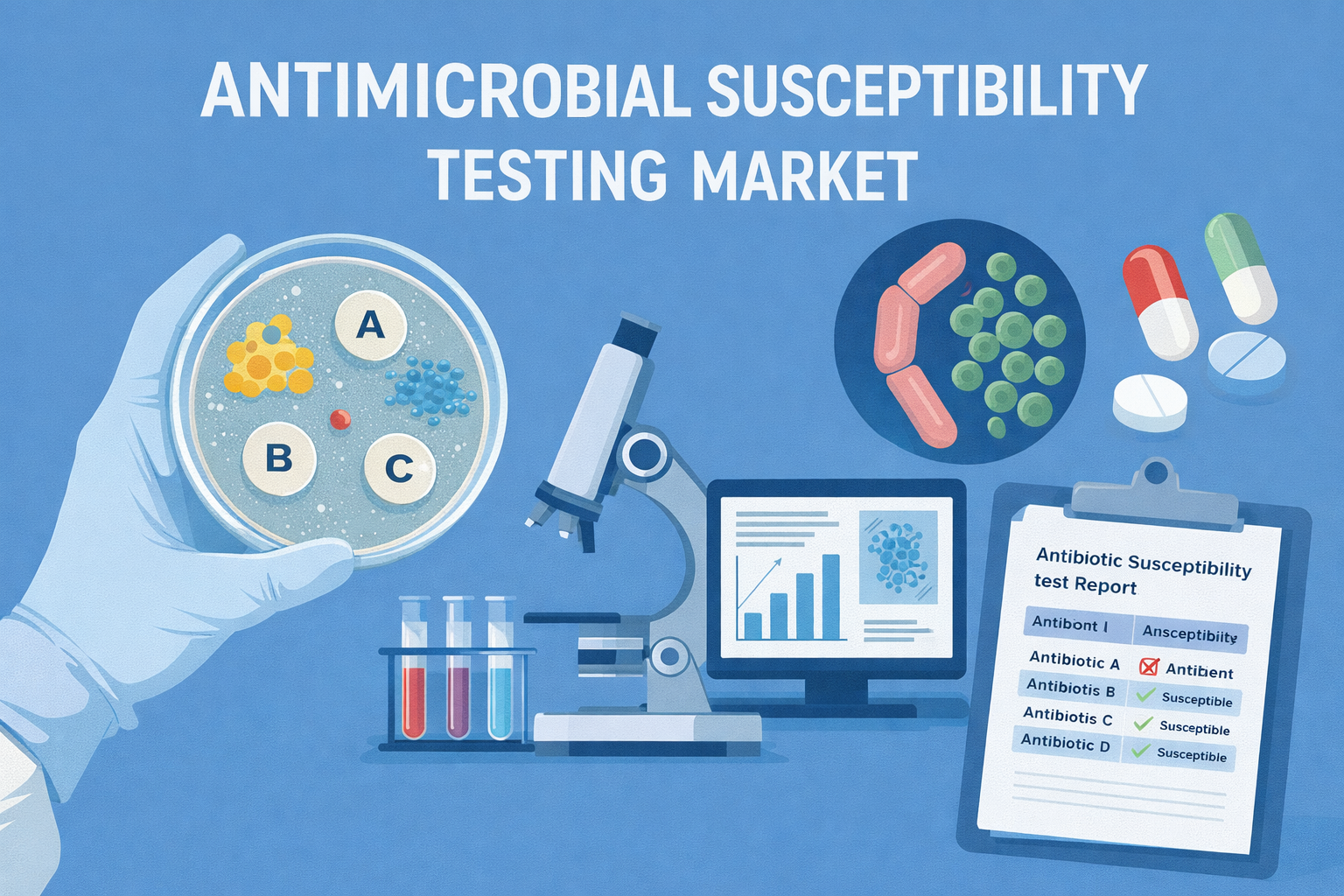
In the relentless, often unseen battle against antimicrobial resistance (AMR), a critical frontline is experiencing a seismic shift. The global Antimicrobial Susceptibility Testing (AST) market, the indispensable arsenal for guiding effective antibiotic treatment, is surging on the back of a perfect storm: rising superbug threats, technological revolution, and strategic industry consolidation. This sector, once a quiet backbone of clinical microbiology, is now a hotbed of investment, mergers, and groundbreaking development, positioning itself as a pivotal weapon in safeguarding modern medicine.
The Stakes: A Market Powered by Urgency
The numbers paint a picture of both crisis and response. According to the World Health Organization (AMR) is one of the top ten global public health threats, directly contributing to nearly 5 million deaths annually. This alarming reality is the primary engine driving the AST market. Every misprescribed or ineffective antibiotic accelerates the resistance crisis, making rapid, accurate susceptibility testing not just a diagnostic step but a moral imperative for antimicrobial stewardship.
Fueling this urgency is significant investment and strategic movement among the industry’s top players. Established giants like bioMérieux SA, Becton, Dickinson and Company (BD), Thermo Fisher Scientific Inc., and Danaher Corporation (through its subsidiary Beckman Coulter) are no longer merely selling instruments and panels. They are engaged in an innovation arms race, channeling substantial R&D investments into faster, automated, and more precise systems. The focus is squarely on reducing turnaround times from days to hours, a critical factor in improving patient outcomes for severe infections like sepsis, where every hour of delayed effective therapy increases mortality.
A Landscape Reshaped: M&A and the Quest for Dominance
The competitive landscape is actively being reshaped through strategic Mergers and Acquisitions (M&A). Companies are aggressively acquiring niche innovators and complementary technologies to build comprehensive, end-to-end solutions. Recent years have seen deals focused on molecular AST, rapid phenotypic technologies, and AI-driven diagnostic platforms. This consolidation allows leaders to offer integrated workflows—from specimen processing and automated incubation to sophisticated analysis and reporting—locking in laboratory contracts and creating higher barriers to entry.
Simultaneously, a vibrant ecosystem of emerging players like Accelerate Diagnostics, Inc. and Q-Linea AB is challenging the status quo with disruptive technologies. Accelerate’s Accelerate Pheno™ system, for example, promises AST results in about 7 hours directly from positive blood cultures, a fraction of the traditional time. This dynamic between entrenched incumbents and agile disruptors is accelerating the pace of innovation across the board.
The New Frontier: AI and Automation
The most transformative developments are occurring at the intersection of biology and digital technology. The next generation of AST is being defined by artificial intelligence (AI) and advanced automation. AI algorithms are being trained to interpret complex growth patterns in automated systems, potentially identifying subtle resistance phenotypes that human eyes might miss. Furthermore, automation is expanding beyond large hospital labs to decentralized settings. Compact, easy-to-use automated AST systems are bringing sophisticated testing capabilities to smaller clinics and even point-of-care environments, a trend massively accelerated by the decentralization lessons of the COVID-19 pandemic.
According to SNS Insider, The Antimicrobial Susceptibility Testing Market size is estimated at USD 4.27 billion in 2025 and is expected to reach USD 6.36 billion by 2033, growing at a Compound Annual Growth Rate (CAGR) of 5.10% over the forecast period of 2026-2033. This robust growth trajectory is underpinned by the factors now dominating industry headlines: the high cost of AMR to healthcare systems, stringent regulatory mandates for AST implementation, and the continuous launch of technologically advanced products.
Regional Dynamics and Future Challenges
Geographically, North America currently holds the largest market share, driven by high healthcare expenditure, strong regulatory frameworks from the CDC and FDA, and early adoption of advanced technologies. However, the Asia-Pacific region is poised to be the growth epicenter, with its forecasted CAGR leading globally. Rising healthcare awareness, increasing investments in hospital infrastructure, and the grim reality of some of the world’s highest AMR rates in countries like India and China are creating an immense demand for improved diagnostic capabilities.
Despite the bullish outlook, the industry faces headwinds. The high initial cost of automated systems remains a barrier for resource-limited settings. Reimbursement policies for rapid AST methods are still evolving in many regions. Furthermore, the industry must continuously innovate to keep pace with the ingenious and evolving mechanisms of bacterial resistance itself.
Conclusion: More Than a Market, A Mission
The story of the Antimicrobial Susceptibility Testing market is no longer just about selling diagnostic kits. It is a narrative of a global health community mobilizing its technological and financial resources against an existential threat. The convergence of rising superbugs, strategic M&A, and breakthroughs in AI and automation is transforming AST from a supportive lab function into a cornerstone of precision medicine for infectious diseases.
As investment pours in and top players jockey for position through both innovation and acquisition, the ultimate beneficiary is poised to be the patient. The goal is clear: to ensure that when infection strikes, the right weapon is chosen immediately, preserving the power of our remaining antibiotics for generations to come. In this silent war, the AST market has been mobilized, and its growth is a direct measure of the world’s escalating fightback.