








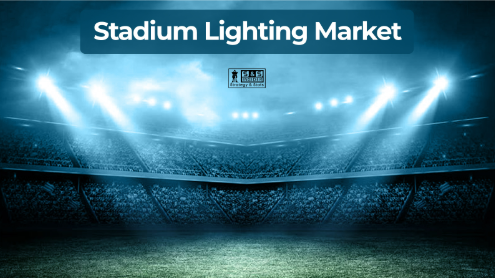
The global sports infrastructure industry is undergoing a visible transformation, driven by modernization efforts, sustainability goals, and the rising commercial value of live sporting events. One of the most critical components of this evolution is advanced lighting technology, which plays a vital role in enhancing athlete performance, spectator experience, and broadcast quality. As stadiums increasingly adopt smart and energy-efficient solutions, lighting systems are emerging as a strategic investment rather than a basic utility.
The Stadium Lighting Market was valued at USD 584.73 million in 2023 and is expected to reach USD 1,138.16 million by 2032, growing at a CAGR of 7.72% over the forecast period from 2024 to 2032. This steady growth reflects rising investments in new stadium construction, renovation of aging sports facilities, and the global shift toward LED and intelligent lighting systems. Governments, sports federations, and private investors are prioritizing high-performance lighting to meet international broadcasting standards and sustainability targets.
Market Growth Overview
Stadium lighting systems have evolved far beyond conventional floodlights. Modern solutions now integrate advanced optics, uniform illumination, glare reduction, instant on-off functionality, and compatibility with high-definition broadcasting requirements. As global sports viewership expands through digital platforms and international tournaments, stadium operators are under pressure to deliver visually superior environments that meet stringent lighting standards.
The growing popularity of night-time sporting events is another major contributor to market expansion. Sports leagues increasingly schedule evening matches to maximize audience reach across time zones, which increases reliance on high-quality artificial lighting. Additionally, multipurpose stadiums that host concerts, cultural events, and exhibitions require flexible lighting systems capable of adapting to varied event formats, further supporting market demand.
Key Market Drivers
The most significant driver of the stadium lighting market is the widespread adoption of LED technology. LED stadium lighting offers substantial advantages over traditional metal halide and halogen systems, including lower energy consumption, longer operational life, reduced maintenance costs, and improved light control. These benefits make LEDs an economically viable option for both newly constructed stadiums and retrofit projects.
Another major growth driver is the increasing emphasis on energy efficiency and carbon reduction. Governments and regulatory bodies across the world are implementing stricter energy efficiency standards for public infrastructure. Stadium operators are responding by upgrading to lighting systems that reduce electricity usage and operational costs while supporting sustainability commitments. Incentives and funding programs for energy-efficient upgrades are also accelerating adoption.
Technological innovation is further shaping market growth. Smart lighting systems equipped with sensors, automation controls, and wireless connectivity allow stadium managers to optimize brightness levels, monitor system performance, and reduce unnecessary energy use. Integration with Internet of Things platforms enables predictive maintenance and real-time diagnostics, enhancing operational reliability and long-term cost savings.
The growing commercialization of sports is another key factor fueling demand. Professional leagues, broadcasters, and sponsors require optimal lighting conditions to enhance visual appeal, improve brand visibility, and ensure consistent broadcast quality. High-definition and ultra-high-definition broadcasting standards demand precise illumination, color rendering, and uniformity, making advanced lighting systems essential.
Technological Advancements Shaping the Market
Innovation continues to redefine stadium lighting capabilities. Modern systems are designed to eliminate flicker, reduce glare for players and spectators, and deliver uniform illumination across large playing surfaces. Advanced optics and beam control technologies ensure precise light distribution while minimizing light spill into surrounding areas, addressing environmental and community concerns.
Smart control systems enable dynamic lighting scenarios, allowing stadiums to adjust illumination levels for different events or create visually engaging light shows during ceremonies and entertainment segments. These features enhance fan engagement and help venues differentiate themselves in a competitive sports and entertainment landscape.
Future Outlook
The future of the stadium lighting market looks highly promising as global investments in sports infrastructure continue to rise. Emerging economies are building new stadiums to host international tournaments, while developed regions are upgrading older facilities to meet modern standards. The increasing integration of renewable energy sources with lighting systems is expected to further improve sustainability and reduce operating costs.
Advancements in artificial intelligence and automation will likely play a larger role in the coming years, enabling fully adaptive lighting systems that respond to real-time conditions, event requirements, and occupancy levels. As sports venues evolve into smart, connected ecosystems, lighting will remain a core component of this transformation.
Conclusion
The stadium lighting market is experiencing robust and sustained growth, supported by technological innovation, energy efficiency initiatives, and the expanding global sports industry. With the market projected to more than double in value by 2032, lighting systems are becoming a strategic investment for stadium owners and operators. The shift toward LED and smart lighting solutions is redefining how stadiums operate, enhancing both economic and environmental performance. As demand for world-class sports experiences continues to rise, advanced stadium lighting will remain essential to the future of modern sports infrastructure.
FAQs
What does CAGR indicate in the Stadium Lighting Market?
CAGR represents the average annual growth rate of the market over the forecast period, showing steady expansion despite year-to-year variations.
What is the forecast period for the Stadium Lighting Market?
The forecast period for the market spans from 2024 to 2032, during which significant growth is expected.
Which regions are driving market growth overall?
Market growth is being supported globally, with strong contributions from regions investing heavily in sports infrastructure development and stadium modernization.