









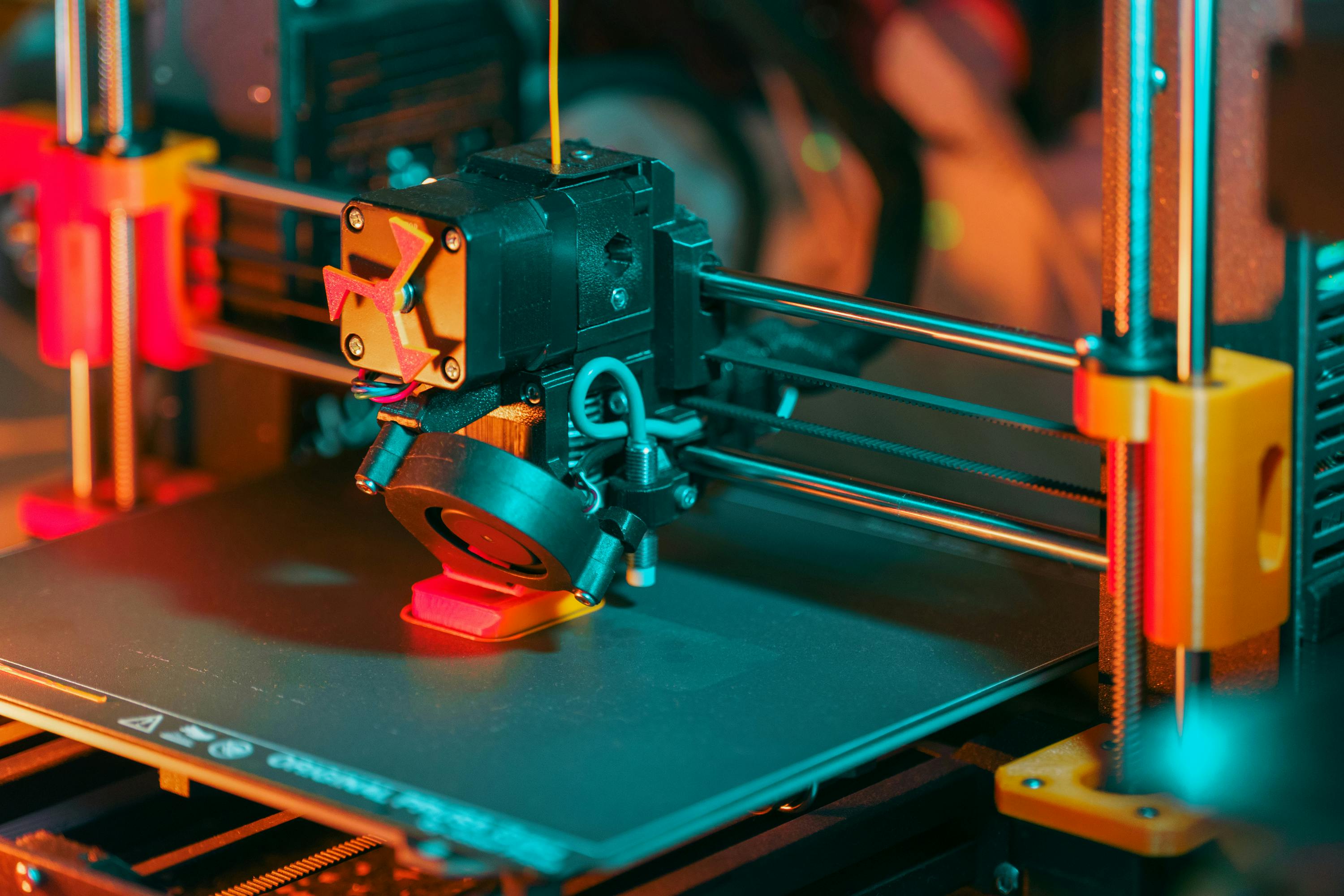
The global 3D printing market sits in the mid-30-billion-dollar range as of 2026 and is forecast to roughly quadruple over the next decade. Precedence Research pegs the 2026 market at about 34.85 billion dollars, growing toward 152.72 billion by 2035 at a compound annual rate near 18 percent. Fortune Business Insights offers a more conservative 2026 figure of 28.55 billion, while Grand View Research projects the market past 168 billion by 2033. The estimates differ, but the direction does not: sustained, double-digit growth driven by faster, cheaper, more capable machines.
What the forecasts agree on
Methodologies vary across research firms, which is why the headline numbers spread by several billion dollars. The agreement underneath is more useful than the disagreement. Every major forecast, from Grand View Research to Precedence Research, projects a compound annual growth rate in the high teens to low twenties through the early 2030s. That kind of growth reflects a technology moving from prototyping niche toward production tool.
The demand drivers named across these reports are consistent too: rapid prototyping, mass customization, and on-demand production across aerospace, healthcare, automotive, and consumer goods.
What cheaper printing means for inventors
For an independent inventor, the market story translates into a simple shift. A physical model that once required an outside shop and a meaningful budget can now, in many cases, be printed quickly and inexpensively. That lowers the cost of holding a tangible object early in a project.
It does not, by itself, make a physical prototype necessary. This is the part inventors often get backwards. The falling cost of 3D printing makes a print easy to get, but easy is not the same as required. Whether a project actually needs a printed model depends on what question the inventor is trying to answer, not on whether a printer is available.
When a print earns its place
A 3D print is most useful when a question can only be answered by holding the object. Does the grip fit a hand. Do two parts assemble. Does the geometry feel right at real scale. Those are physical questions, and a print answers them well.
A print is far less useful for the questions that actually decide a licensing conversation: does the market want this, will a company pay to make it, does the design read as finished. Those questions are answered by clear visuals and a credible pitch, not by a rough printed shell.
The virtual-first view
Enhance Innovations, a product development firm founded in 2010 in Champlin, Minnesota, builds its core deliverable around digital tools rather than physical ones. Its standard package is a virtual prototype: photorealistic renderings, a CAD model, and optional product animation. Physical models, including 3D prints, are scoped only when a specific project needs one. The firm keeps design, engineering, marketing, and licensing under one office, so the decision to print is made against what a project requires rather than out of habit.
That approach fits where the data points. Companies increasingly evaluate and license inventions from renderings and animation, and a CAD model is what a manufacturer needs to move toward tooling anyway. A 3D print is a checkpoint along the way for some products, not the destination for any of them.
Materials and the limits of a print
The growth figures also hide a quieter truth about materials. A print made in one plastic can answer a question about shape while saying nothing about how the finished product, molded in a different material, will behave under load or heat. Aerospace and medical applications, two of the fastest-growing segments in the forecasts, lean on 3D printing for production parts precisely because the printed material is the final material. For a consumer-product inventor whose end product will be injection molded, an early print is a shape study, not a performance test. Knowing which question a print can answer keeps the spending honest.
Reading the market correctly
The growth figures are real and worth understanding. A market expanding at close to 18 percent a year, by Precedence Research’s estimate, will keep making physical prototyping faster and cheaper. The mistake is to read that trend as a mandate. Cheaper printing widens the inventor’s options; it does not narrow the path to a single physical-first method. The USPTO grants patents on inventions described in drawings and specifications, not on printed samples, and the SBA’s guidance on managing a small business stresses spending against a plan. For inventors, that means asking what a print would tell them before paying for one, however low the price has fallen.
Market figures are drawn from published forecasts by named research firms and vary by methodology. This article is informational and not investment advice.